The AI Readiness Framework for K-12 education
Bring AI readiness to schools across the country
Free curriculum, tools, and professional development for K-12 educators.
What does it mean for students to be ’AI ready?’
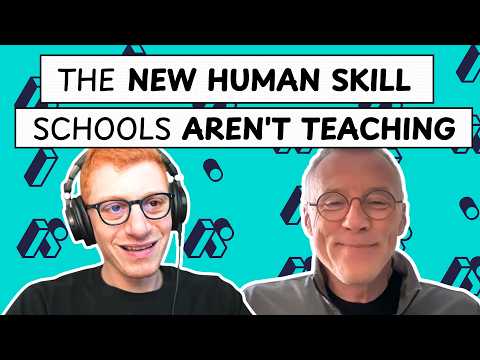
In this ’in-house’ episode, @aieducation CEO Alex Kotran sits down with Chief Program Officer Emma Doggett Neergaard and Director of Learning Khushali Narechania to explore the organization’s new AI Readiness Framework. The aiEDU Learning Team unpacks how their framework provides a roadmap for K-12 educators to prepare students for an AI-powered future.
The team dives deep into what makes their framework unique – specifically, its focus on durable skills like critical thinking, creativity, and problem-solving alongside technical knowledge. Rather than prescribing specific AI tools or technologies that quickly become outdated, the AI Readiness Framework emphasizes building foundational skills that will serve students regardless of how AI evolves.
One key point is that AI readiness reinforces many educational priorities that we already value. "Critical thinking is not something we just came up with," Emma explains. "It’s more important than ever." The conversation also explores how core subjects like English and math become more crucial, not less, as AI transforms the workplace and society.
Whether you’re a classroom teacher wondering how AI impacts your subject area, a school leader developing an implementation strategy, or a district administrator crafting education policy, this episode provides clear guidance on meaningful next steps toward comprehensive AI readiness for all students.
*Chapters:*
- 0:00Introducing the aiEDU Learning Team
- 3:28The AI Readiness Framework’s purpose
- 7:54Key changes in version 2.0 of the framework
- 12:09Adapting to rapidly changing technology
- 17:04Transforming education with AI
- 22:38Critical thinking in the AI era
- 27:14AI’s impact on core subject teaching
- 32:05Limitations of AI in education
- 35:32Practical steps for implementing AI readiness
Initial drafts from any AI tool we’ve used for any curriculum have been terrible. Like they’re not good because it’s just the initial draft, right? Like you can’t get the full context and the nuances that you need.
But with a lot of our expertise, we can craft like here are the things that we want to focus on. Here are some of the strategies, instructional strategies we want to make sure are captured in curriculum and here’s how we would want to format the timing. Like these are things that require our designers to understand and know well because that is not something that an AI tool is going to generate on its own.
Hey everybody, we’re here with a fully internal recording of AIDu Studios. I’m Alex co-founder CEO. I’m joined by Emma Daganard, our chief program officer, and Kashalei Narania, our director of learning.
We’re going to be talking about V2 of our AI readiness framework that just released. I would only do a average job explaining it. So I figured let me actually bring the brains behind it to talk about what this document is, why it’s important, and how it’s been guiding our own work as well as how we envision it guiding the work that educators are doing all over the country.
But why don’t we just do some quick intros for those who don’t know you. Emma, yeah, tell us a little bit about yourself and how you got to aiEDU. Yeah, thanks Alex.
It’s great to great to be on the podcast. So I started my career as a classroom teacher. I taught 8th grade.
And after that have worked at several national nonprofit and for-profit education organizations. I was at the achievement network for over a decade, building the program there around highquality professional learning for educators. Focus on instruction in math and literacy, high quality assessment design and support and thinking about district and system change.
So, coming to aiEDU over a year ago, felt a very natural extension of how to support our educators and our systems in preparing all students for for the age of AI. Yeah, we’re very lucky to have you. And we’re also very lucky to have Kashali.
Kashali, what you’re you’re not too far from me in the just across the bay. Just across the bay. I’m in Yes.
I’m based out of Berkeley right now. I started my career as a high school math teacher in Chicago and New York and then worked at Relay Graduate School of Education for over a decade where we built out a teacher preparation program and I led the content instruction arm of that and into the online learning space. How do we maintain highquality instruction in virtual spaces and reach more teachers that aren’t able to go to traditional teacher prep programs?
And that has just brought me on this journey with education technology and how we can use technology tools to really amplify what teachers do best around getting to know students and supporting them in learning outcomes. And so that’s brought me here to AIADU to think about this new frontier we’re on with AI readiness and supporting teachers and students in in all that they need for the world ahead. And hopefully our editors are going to key this in otherwise viewers are going to be like why does Alex suddenly have headphones?
And the answer is I forgot to put my headphones on. So we’re still learning. I mean this is we’re helping teachers with their learning journey on AI and I’m on a learning journey not just on AI but on podcast production.
So we have this framework a framework for AI readiness or I think we call it our AI readiness framework. We released it last summer and we just released V2. Can you tell us about what the framework is and em I’ll just start with you and then K let you jump in.
Yeah tell us about what what the framework is and and what’s different about about this new version that we just published. Yeah. So I think we set out originally to provide a framework to guide our work in many ways which was creating highquality materials to build AI readiness, supporting educators in their building of capacity and supporting school systems in evolving to support all students.
And then we sort of realized well actually this would be really useful to put out there as a tool that anyone could use. So what it is is essentially a model of competencies for students and for educators and then a a rubric of support for school leaders and for district leaders to define what is AI readiness and how do we take those steps to ensure all students are AI ready. So the student and the educator competencies they’re intended to be across curricular areas.
They’re intended to really support educators in understanding what AI readiness can look like. And they go beyond using AI tools. It’s not just about using AI tools.
It’s about all of those durable skills that you need for your future. So that includes knowledge of AI and the use of the tools, but it also includes critical thinking aspects and it also includes the very important domain we call the human advantage which is about how you leverage human skills. Being a lifelong learner, creativity and problem solving.
That those are just as essential for the future. And then as we go to the sort of school leader and district rubrics, those are intended to be kind of a roadmap of where might you start as a district, where might you take the next step to to lead the system change or the schoolwide change that would support educators and students in in becoming a ready. Yeah.
So Kosali, we have a new version. What what should our audience expect when they open this up, especially if they sort of were to compare the two? Yep.
So, the there’s a lot that’s changed in the last year. There is new research out on the impacts on kind of the workforce and skills for future readiness. There is you know nent research on what LLMs and AI are doing to the brain and kind of the science of learning that goes behind using these tools and there have been there’s just been a lot of work done in the AI literacy space in general and so we have been able to take a lot of that and really integrate that into as Emma was talking about the leading with human advantage.
So for the student competencies, you’re going to see the most amount of change there where we’re better able to articulate what are some of those skills the durable skills that folks that everybody’s going to need students especially in the world of the future and what that can look like in classes as a progression from K through 12. And so that is a big change in the student competencies along with a very clear call out of the importance of core content area skill development. So AI readiness development doesn’t happen in isolation but alongside core skills that students need to develop and I think that’s a really important thing to call out.
The other I think big big change is we didn’t have a school leader version of a rubric. There was a district readiness rubric and educator competencies and school leaders are at the forefront of actually taking any district visioning and strategy and really implementing it in the school and thinking a lot about what what are the instructional choices to make as a school and how do we support teachers in what the instructional pedigogy needs to be for the for the classes. And so that in our minds like required some extra thought and care especially on teaching and learning for the school leaders.
So those are two really big ones. And then there’s a lot of updates to the district readiness rubric to be much clearer on the the criteria for for success if you will there. As Emma was describing the the road map a district might take as well.
Yeah. Thanks Kashali. I you know what you’re describing it makes a lot of sense but I think for our audience there this probably this isn’t the only framework that they might be aware of.
In fact there’s a lot of frameworks that either are touching on artificial intelligence and AI literacy but then also a lot of the competencies that you described really durable skills is maybe one way to encapsulate them. There are also a lot of other frameworks about that like how does this fit in? Is it designed to kind of compete with all of those or or you know like if not then you know sort of how should folks imagine it alongside those other frameworks?
Yeah. So this is not intended to compete with any of the other frameworks out there and in fact the all those other frameworks served as part of the foundational work of understanding what was out in the space what was emphasized across all of them too. So taking that and synthes synthesizing a bit and one of the things that I think the AI readiness framework from aiEDU does is really highlight the progression of learning that needs to happen across these skills so that we can see what can be happening at the elementary level, middle school level and high school level to really what does it mean to build a definition of AI over time and how nuanced does it get by high school?
What does it mean to critically think about and and use AI when younger kids are probably not even in the tools yet, right? And how do you still develop that critical thinking? And so what our our framework aims to do is really focus in on kind of what what those student outcomes can be and then everything else centers that.
So what are the student comp so with those student competencies in place? What are teacher competencies that are going to serve those? So what do teachers need to know to be able to support students in that?
And then the district and and school leader frameworks kind of set up the system to support teachers and students in in achieving those. Yeah. And I just add I think every framework makes choices about what’s in and what’s out.
We tried to make choices along a few lines. One was coherence as Kush is talking about all the way up through grades but then all the way up from students to district. And the other is just practicality.
We didn’t want this to be overwhelming and every single possible thing, but actually what are the most important things and those are the areas that we want to continually validate from the field and from research. Is this the most important thing for us to focus on for students, educators, school leaders, district leaders? Yeah, it it’s I think the assumption for many folks is that to be AI ready, students need to be able to harness AI.
And there’s sort of like a logic flow from that which is okay the students are students are going to be left behind if they don’t know how to use AI. Therefore AI and education is all about how do we make sure that students have the chance to be hands-on which then from that flows which tools do we provide students? Our framework doesn’t necessarily focus on that.
In fact, I think you I I would argue that you actually could see some a lot of aspects that would inform how you do that, but there really isn’t like a blueprint, for example, for here are the here are the tools to start with, here’s sort of like you know, how to get students hands-on. And can you talk about like why we made that decision? The technology is rapidly changing.
What we are using now is different than what we were using a year ago and what’s going to be coming 5 years from now is going to be different than what we have now. And so anchoring in any particular tool shortens the longevity of what what we’re what we’re trying to have students center on and have teachers center on. And so our focus here is really thinking about what are skills that can continue to evolve as the technology evolves.
And still hold true. And so even if a school is implementing something now, that work can still hold true 5 years from now. And it can be adaptive and flexible.
And I think if we anchor too much in very specific or prescriptive tool use or sequence of tool use, you lose that adaptability as as the market keeps changing. And so we really wanted to hone in on what are the what are those skills and what will be long lasting and still flexible as as the environment changes. Yeah.
I think additionally you can come to a tool as a student or a teacher and you can radically misuse it. And it’s not just about how you use it but about the foundational knowledge and skills you have in approaching it. There’s not a lot of research understandably yet on the effectiveness of AI tools in classrooms because I just purely have not been around that long and our understanding of what is effective is going to evolve as that research develops as tools are used as we see the results for students.
So in as that’s progressing I think what’s most important is to focus on building that foundation so that a student an educator can approach any tool with the skills and knowledge and competence to be able to use it effectively evaluate its effectiveness plug it in in the right place or not. Be cautious about purchasing all of those things that we want and have wanted for a technology and education you know from for many many years. Yeah.
In the kissing point, I remember when our team was huddling and trying to decide whether to create a you know specific learning series around using chat GBG for kids and we shied away from it in part because you know when we were talking to the technologists at the time everybody was really focusing on how do you prompt engineer they were like prompt engineering bibles being not just published but sold for which is totally snake oil I think but that the idea is okay let’s teach people to become prompt engineers and there were even folks saying like prompt engineer might be even a job of the future. And then you know in the last 8 months we’ve had the release of these reasoning models and if you’ve used Gemini or chat GBT you can actually click a button and see the the prompting process and the model is literally prompting itself. So, a lot of the things that we would have been teaching in like a prompt engineering class are now being performed by the AI and it’s actually a little bit more about it’s a little more subtle actually the the the qualities and I I want to sort of hone in on that because you know in the competencies for students and teachers I actually see a lot of common threads that are even relevant to organizations that are trying to think about you know AI transformation and I’ll put our own organization in the spotlight.
Right. I mean, one of the things that we’ve been really sort of grappling with is, you know, our team isn’t just AI literate. We build AI literacy content and yet that hasn’t necessarily translated to everybody is now a power user of AI and everything is AI automated.
I think there’s like some folks on the teams who have actually been like vibe coding and building amazing stuff and there are others who are still more in experimentation mode. Are there any parallels in terms of like just even some of the approaches that we have internally to some of that change management that might be relevant to educators or like system leaders who are thinking about like how do I you know bring my school or my district into sort of like this like AI forward posture. Yeah.
I mean I think a lot of it’s tied to what’s your approach to change management and how do you think about change management in a very rapidly changing technology space. So sometimes traditional change management has been try something small, pilot it, learn lessons, roll it out to more people. I think in the age of AI that might be insufficient because by the time you’ve piloted something, everything has changed.
So it’s not you’re rolling out to a fixed endpoint. You’re actually constantly understanding new and novel things. So there’s more of like a design thinking, problem solving, deploying, creativity that’s necessary for people to try and experiment.
But in order to do that effectively, you need some basic understandings. So it’s easy to play around with chat GBT for 20 minutes and then kind of run into like a okay, that was fun. It was kind of like a good gimmick.
But in order to actually transform work or transform the outcomes, you need to have some vision of okay, let me actually critically understand where this could be helpful, what the capabilities are, how I you know, we have a competency in the framework that’s called determining responsible use. It says critically assess the appropriateness of using AI for new problems and include the ethical implications. So we think about that in the context of our own work of is this the right thing to use AI for?
You might think about talent management. Is it right to use AI to screen resumes or not? Why?
When? How should you be doing that? So I think there’s there’s a lot more critical thought when you take AI use from just playing around and kind of a gimmick and a showy thing to actually thinking about how it might embed in an organization.
I mean would you say folks shouldn’t be using AI to screen resumes? I don’t think I have to think I don’t think we do that. I I I use AI to screen resumes.
Yeah, we we don’t. But I I I think it’s an interesting question, you know, like does it does it pick up on the right things? Is that equitable?
Is it fair? People are using AI to write resumes. So yeah, I you know, I don’t I think those are the questions actually you need to debate as an organization.
It takes a huge amount of human time to screen resumes as an example, but does AI get it right? Is that fair to candidates applying? So I think there there are those kinds of debates across functions and for a school district I mean that that’s exactly what I think is coming up all all over districts which is it’s not just about the classroom it’s also about the function of the district the internal operations of a district how you run a school and where does AI plug in and for what purpose it’s not always to gain efficiency sometimes it is sometimes it’s accuracy sometimes it’s combining information or data in ways that is very laborious or you can’t really do in other mechanisms.
So all of that is applying critical thought to its deployment and application and that that’s more than just buying a tool or adapting a tool. It’s actually kind of a a strategy. I feel like you stonewalled a little bit, you know, like I I I don’t I think this is actually like the the the the the difficulty of that question of like should we use AI and screen resumes comes in part with like many companies have been using not necessarily language models but machine learning to screen resumes.
In fact, if you anybody who’s like heard the tip like oh just add a bunch of words and sort of like white font to the bottom of your resume so they they can like get picked up by like the resume scanners. So I I think what you just described is yeah, it is more complicated, but it actually is more complicated. Like there’s there’s a lot that you have to digest.
And while that isn’t as neat as like a neat as like a nicely package is like single decision, which is like what tool do we buy? That’s kind of that is the only sort of path forward is sort of like this much more broad-based organizational change management. Yeah.
Project. And it’s hard, but it has to be done. And the schools that do it and start moving are going to have a huge, you know, leg up because this is still sort of like the early the early days.
Yeah. And I think those that are moving are, you know, see it as a priority from from the top of the organization. So they’re they have a champion like there is a champion and often they’re putting in place people who whose role at least in part.
Of course, not all all systems have a whole, you know, person worth of time to put towards this, but have some leadership of like, okay, this is an intentional strategy and an intentional change management project and we need to think about, you know, what are our approaches and where are the experiments happening and how do we not have a proliferation of lots of different things. I think some of the early movers did some really great experimenting with lots of different tools and now are finding themselves saying, "Oh, wait, wait, wait a minute. Now we need to rein it in a little bit and have a strategy and I think there are some on the other end who are so hesitant to try things that they maybe haven’t had enough experimentation so it’s it’s as a as a leader so difficult to strike that balance between experimentation and rapid change and sort of strategy that is going to make sense for the the sort of entity yeah I mean I feel like if I was a superintendent I probably would have had an AI ban and I probably would have gotten a lot of heat for it but I think it’s I I I think the schools that that have actually like literally banned AI are not necessarily in a bad place.
The question is you’re going to have to do something next. Like a ban on AI only makes sense as a to just buy yourself time to sort of set the strategy and the vision. I mean Kosali just like with an eye towards you know what does it actually look like?
You know you’ve been helping us build and grow our AI trailblazer fellowship which is I’ll let you describe it. You can describe it better than me, but I’m curious. You know, we had the framework, the V1 of the framework last year.
Was it valuable at all in, you know, in the the professional learning cohorts that we were running with Trailblazers? The Trailblazers program is the is a is a wonderful program. It’s in our third year now, where we bring on teachers who are in the field and kind of at the forefront of the AI work and thinking in their schools and wanting to bring AI literacy to their classrooms in particular.
And so we it is a paid fellowship. We value our teachers time. They implement our curriculum, give us great feedback on it, get us examples of what it can look like in the classroom to use some of our curricular products like the snapshots or the explorations.
Which none of which require AI tools because again it’s anchored on what is that critical thinking or conversation or collaboration that we want to spark with students that has them then be able to apply that in other situations or develop deeper skills from there as well. And so this this fellowship has given us given us great feedback on what works well in classes, what teachers are looking for, what students really respond well to and helps us evolve our curricular products. And the feedback from fellows has been so so great and like they are so satisfied with it because it is a space for them to develop their own skill for how to have these conversations with students to be able to then have training on the content that we’re providing, the curriculum we’re providing.
Like what does a snapshot look like? How can you facilitate it? What student responses should you be looking for?
And how does that evolve over time? And then being able to share with one another. They film themselves.
They get to watch each other in action. And I think that’s one of the most powerful ways for teachers to to learn together is to be able to see in action what this content could look like and see it across the country in different school contexts, etc. And so, and so the framework, has helped us be able to zero in on what specific aspects of the teacher training do we want to hone in on in developing their fluency with how to talk about the content, how to facilitate these discussions, and then creating opportunities for students to be able to have these conversations as well. And then what our curriculum should focus on so that there are easy entries for all teachers and the ability to do a variety of of activities with students and start embedding into their into their curriculum as well.
Yeah. I mean you mentioned sort of curriculum development which I think is such a cool aspect of Trailblazers is actually informing aiEDU’s curriculum strategy. I mean, Emma, I remember the conversation that you and I had, it was months ago now, but where you were basically like, hey, the based on the framework and some of the feedback that we’ve been getting, like, I actually think there’s a really specific shift that we need to make in terms of the stuff we build next.
We just published our elementary explorations, which we’re getting tons of great feedback on. Yeah. What was the shift in sort of like what prompted you kind of like making that decision?
Yeah, we we were getting a lot of feedback which was, you know, these these curricular pieces are great. They feel like not enough to actually build accuracy because they’re kind of scattershot. So like how do I actually use these?
And we were also getting a lot of feedback from core content area teachers which was saying I don’t really have like a lot of extra time to start doing AI readiness lessons. And so part of what we’re we’re doing now is is thinking about, you know, core content teachers have curriculum. Often they have really high quality instructional materials, which is excellent.
That’s been built over many years. They’re been trained in them. They’re used to them.
They’re making modifications to them to fit their students. Why don’t we build AI readiness right into the core areas? And not do that by saying it’s additional, it’s more, it’s new, but by saying here are some choices you could make, some supplemental pieces that you can kind of like embed within what you’re already doing that actually highlight and build some of these skills right within a class that all students are taking.
It it provides more equitable access to this content. Again, it’s not about using a particular tool or even having AI to do the lessons. It’s about highlighting some of those key foundational skills and saying this is really necessary for how we think about the future skills you’ll need in in life and work and aspects of like that.
I think one of my own growths in and and really with Emma and Kashali with your like one of one of the things you’ve helped me to see is AI readiness actually is grounded in a lot of the stuff that we’ve already been teaching in schools or at least the stuff that we’ve talked about wanting to be teaching in schools. So like first of all durable skills none of that is new. We maybe they were called 21st century skills or durable skills or social emotional skills or digital literacy media literacy.
So a a lot of it is just sort of like remixing that and like sort of layering in the AI context. And then you know core subjects like math, English, science, social studies. I think teachers in those subjects are asking themselves the question of is English language arts relevant now that AI can write?
It’s not as good at math. So I think math teachers maybe have a little bit more time before they’re feeling that. What you were describing is no actually English is more important than ever because a there’s all these underlying skills that you also build in English.
The ability to like form an argument and sort of advocate that for that argument. The ability to, you know, structure your thoughts and to, you know, whether it’s an essay or, you know, other written, you know, writing products. Are teachers surprised by that?
I mean, like I like, do you find that teachers are often coming and assuming that what they’re what they need to learn is maybe more transformative than what we actually are prescribing? Yeah. I mean, it is sort of like, oh, wait a minute.
Critical thinking is not something we just came up with that we thought would be a good idea. It’s more like it’s sort of more important than ever. Imagine coming to a essay and not being able to critically evaluate whether it’s high quality.
So that really puts you at a disadvantage because now you know although AI can write a great critical essay, it you need even more so those skills of thinking, analysis, understanding that we’ve always wanted to build in literacy. We’ve always wanted to build in math. I mean the math practice standards already articulate a lot of the those kind of durable problem solving, persistence through str, you know, productive struggle type of skills.
Those are critical in in in the age of AI and approaching AI. So I think teachers are kind of relieved like oh wait maybe this puts just more emphasis on some of those things that we’ve thought are the right things to teach. And and still, you know, I’d say like we don’t fully know, like I don’t think anyone has a completely developed vision for what it looks like in the literacy classroom of the future to have AI tools to teach writing and critical analysis, to be strong readers.
Nobody has yet the full vision of what that could look like in order to be the most relevant and the most prepared students for the future. So that’s evol. We all need to evolve like as an education community.
That’s the kind of thinking and problem solving we need to do together. But be open to it’s not it’s not sort of black and white. It’s not oh well AI can write now so we don’t need to teach writing or you know AI can research so we don’t need to teach research skills.
It’s I think that’s far too simplistic. I think one of the most fundamental questions that everybody is probably asking or maybe they don’t you don’t realize that you’re asking it deep down which is is it feels wrong to overrely on the AI like when you use AI to write something and the example that one of our advisers Michelle Culver I think really poignantly uses like if someone writes a birthday message for you and sends you this like really long very kind thoughtful birthday message and that was written by AI I you know how does that make you feel? And most people I think respond they’re like h it’s like doesn’t feel as personal.
But then there’s even more maybe fundamental things about am I going to lose my craft or my ability to to write effectively if I’m overrelying and sort of like developing this almost like crutch. Ka I’m curious how like the learning team has encountered this because you know a lot of folks ask me like oh are you just using AI to write all of your curriculum now and I’m pretty sure the answer is it could write stuff that looks like curriculum but I I mean has it has it just replaced the way we go about creating curriculum and no and not at all because this is part of I mean what Emma was talking about how we’re innovating within our team is thinking about where can we actually use AI effectively and how how how do we do that? And initial drafts from any AI tool we’ve used for any curriculum have been terrible like they’re not good because it’s just the initial draft, right?
And it’s doesn’t understand the full con like you can’t get the full context and the nuances that you need in the in the design. But with a lot of our expertise, we can craft like here are the things that we want to focus on. Here are some of the strategies, instructional strategies we want to make sure are captured in curriculum.
And here’s how we would want to format the timing. Like these are these are things that require our designers to understand and know well because that is not something that an AI tool is going to generate on its own. And so but there’s really really great tools that have kind of helped us be able to synthesize a lot of like headlines from major highquality instructional material curricula of what what are like the key concepts and if we read the curriculum do we agree with that and if that’s the case then what does that mean for what we can build towards and so I think there’s a lot of capacity for us to like keep increasing what we’re producing but it requires so much thinking and and review and scrapping lots of things.
Which at the end of the day, quite frankly, if we just sat down and designed ourselves the oldfashioned way, we’d do it a lot faster, right? Because we have these skills kind of embedded into the work that we do already. But it’s actually thinking about how do you create tools or use tools in ways that could then accelerate the work later for you.
Which requires deep expertise in in the build and the the way in which you interact with it and how you’re reviewing any of the outputs that come out of it. And so I think any teacher will say the same thing. You put in a you put in a request for a lesson plan from you know Chad GPT it’s it’ll look fine and to somebody who doesn’t know good teaching or doesn’t know the standards they’ll be like oh yeah that seems maybe plausible but then you get into it and you’re like this is not aligned to a standard there is no like learning outcome at the end of this the practice is generic and not aligned and it and I have nothing to do with any of my students that need any supports and so it and that I think is what I keep coming back to where it’s just when when you have the expertise, you’re able to have that critical eye and how do you keep honing that as the tools evolve and you like you’re able to do more with them as well.
Yeah. I mean, I think every teacher’s had the experience of googling like I need a lesson plan on this thing and like 50 hits pop up. Now it’s just that there’s like so that’s so fast much faster and there’s so much more access to that.
But teachers have that critical eye. They’ve always been able to go look at those and be like well that’s not going to work. And like that’s sort of half a lesson plan.
So that’s not a good like use of AI necessarily. It’s you know what or or at least what do you need to feed it? What context?
What thinking? And I I do think like as the models get better with their memory, with their, you know, collection of information, that will evolve too. And so we might be saying something different down the road.
But I think right now the only reason we’re able to look at something a tool spits out and say, "Well, that actually isn’t aligned to the standard is because we have that knowledge and expertise ourselves." Yeah. Because people ask me like, "Oh, like have you have you changed the way that you hire? Are you looking for people that are basically AI experts or AI power users?
And I mean I think across the board the answer is no. It’s like you you actually you you the top priority is someone that really understands what good looks like. Like what is a good lesson plan? Because that’s the hardest thing to teach.
It’s not something you can just sort of well we’re not we’re not an organization that just wants to experiment and sort of experiment on kids so that people can learn on the job. And I think there’s analoges to that. So many other domains even outside even within education but even outside of education which I think is heartening it’s like yes the world is going to change but I think there’s already so much disruption that teach educators don’t they’re not eager for more and more disruption like it’s a disruption is sort of happening to them and so the more that we can show how this is actually connected to the things they already understand and actually center their expertise in a way that doesn’t make them feel like they’re sort of out of their element which the the tech community is very bad about this making everybody feel like they’re outsiders and like using sort of terminology to to create sort of like barriers.
Anything that you would close with? So, you know, this is it’s not too long of a document, but there’s a lot in there. Someone might have even while they’ve been listening to this downloaded it and maybe perusing through it.
You know maybe speaking to a couple different personas whether like maybe it’s like a district leader or like an individual teacher maybe a parent you know what are the next steps once they’ve sort of read through the document and are trying to figure out like what what should I be doing? Yeah. And I would say you know just first of all like we come to this with a humility and a mindset of like this is evolving.
We are learning from practitioners who are out there trying things figuring things out every day. So, first I would just encourage anyone who’s reading or listening to to have that same critical eye and openness to learn because this is not the the beall end all that. I’m sure there will be a version three.
There will be many more takes on what to do, what not to do. But for now, I would say certainly from a district leadership perspective, I’d go into that district rubric and and sort of look at the domains and ask, you know, ask yourself the question like, oh, have we sort of taken steps in this area in our district and what have those steps looked like and what have we learned from what we’ve already done because there are so many things that everybody’s already done. So, what what have you learned?
And then where in here resonates as kind of a high leverage next step. And that’s really what this is intended to be, which is what’s my highest leverage next move here? And maybe it’s that, you know what, I feel like we’ve done some great internal learning, but we haven’t really galvanized our community in a way that they understand what we’ve done.
A really high leverage next step might be along the lines of communicating, engaging, reaching out, getting more input. So that that’s really how I would approach it from a from a district perspective. Kash, I mean, you mentioned that we’ve referenced a bunch of other sort of materials.
What are some examples of, you know, like frameworks organizations that we were looking to as we built this? Yeah, I mean there’s so many. I think you digital promise has an AI literacy framework that came out last year.
There’s the UNESCO framework as well. And then there’s the AI lit framework that just recently came out and kind of AI for K-12 that have some five big ideas that we’ve looked at as well. And Common Sense Media also recently released a AI toolkit that has incredible resources as well.
And really like harnessing what what’s already out there for for what districts are doing for implementing. So those are just some of the the the frameworks that are that are out there right now. And we’ve had some really great reviewers of our content.
We had folks from TNTP who have such a great eye for what does it mean to have competencies and kind of building that learning and that have reviewed this work for us in this round in particular and in our in our prior round. And so those are and we’ve had reviewers from the other organizations look through the the content as well. Yeah, I just encourage folks to go to the check out the framework for the full list of all the folks and organizations that we’ve been tapping and and if there are other resources out there that we missed drop us a line.
We’re you know one of our competencies is is you know continual learning and we are continually learning as we do this and that’s why we we’ve been releasing it sort of in in versions. Yeah Kashali Emma thank you so much for for joining. I know it’s a busy week.
I’ll let you get to all the stuff you’re doing, but I really appreciate you tuning in. Thanks. And thanks everyone for listening and yeah, again, just echoing Alex, drop us a line, share your feedback.
We just love to hear from folks about how they’re using this and what their reactions are to make it better. So, appreciate you. There’s a human behind the learning AIDedu email.
So, we are eager to hear from you all. All right. Excellent.
Thanks. Thanks, team.