Zarek Drozda: Every high school student should be data-literate
Bring AI readiness to schools across the country
Free curriculum, tools, and professional development for K-12 educators.
What do K-12 students need to thrive in a world increasingly shaped by AI?
Zarek Drozda, executive director of Data Science 4 Everyone (DS4E), believes data literacy must become as fundamental as reading literacy and he’s building a movement to make it happen.
In our very first episode of aiEDU Studios, Zarek takes us behind the scenes of building his nonprofit coalition and shares honest insights about the challenges of education reform. Rather than competing with other educational initiatives or building curriculum themselves, DS4E have focused on being connectors – bringing together teachers, researchers, policymakers, and curriculum developers to create sustainable change.
Learn more about Zarek and Data Science 4 Everyone:
- 0:00Introduction to Data Science 4 Everyone (DS4E)
- 14:34Genesis of a movement from Freakonomics
- 30:18Building a national data science initiative
- 47:57Why data science matters in education
- 1:05:30Future skills in the age of AI
- 1:23:50Making data literacy fun and engaging
- 1:34:20Collaboration for education reform
- 1:36:09Final thoughts and future priorities
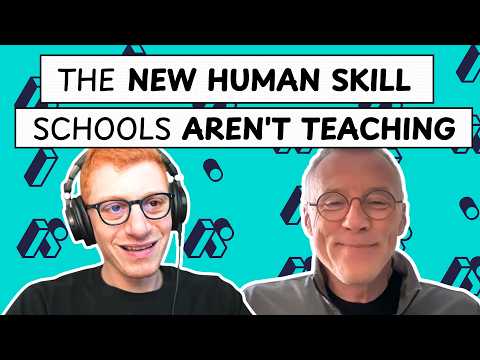
Hi, I’m Alex Kotran. I’m the CEO of aiEDU. And we’re here today, Rick, to record one of our first podcast, not the first, but one of the first podcast for aiEDU Studios.
And with me, I have Zerk Drosa, the CEO of Data Science for Everyone. Zerk’s a longtime colleague, friend and you know co-creator in the space who’s been working to create more opportunities and pathways for kids specifically in your case in the field of data science. And I’m really excited to dive in and I want to hear more about the genesis of as someone else who’s also founded a, you know, small but growing nonprofit in the space, what that experience was like and hopefully we can also nerd out a little bit about artificial intelligence and how data science is a part of that.
Awesome. Well, thank you for the invitation to join. I’m just super excited to help trial out AI edu studios.
And you launching a new a new initiative like this is always super fun. I’m so grateful to be part of one of the one of the guinea pigs. So So Zerick, why don’t you just so tell us about data science for everyone and and if you could just regal with the story of like how this all came to pass.
You’re relatively young. And so yeah, how did someone like you sort of come to come to leading what is now I think widely recognized as one of the leading orgs if not the leading org specifically in the field of data science equity. Yes.
Data science for everyone. We’re a national nonprofit initiative based at the University of Chicago advancing data science and data literacy around the country. And what we’re really really trying to do is help teachers and school leaders and even state leaders think about how to modernize the curriculum and especially modernize some of the core school subjects for the world of changing technology right for the world of AI for the world of big data for the world of whatever the next emerging technology is going to be.
Like that is our core focus and we’ve done a lot of work in particular on systems level change and thinking about how to get the many stakeholders across the full breadth of the education sector to work together combining research and practice and policy on that really big challenge. In practice we have a a pretty narrow focus which is on you know using data science data literacy as a vehicle to think about broader curriculum modernization. And we work we’re in 29 states now or at least 29 states now have a data science or data literacy education program which we’re super excited about.
That’s up from one state in 2019. So we’ve had huge fast growth which we’ve been really excited about. But it’s it’s not depth yet, right?
These are like early stage majority of the states are pilot programs. It’s like 20 or 40 schools. We’re not talking all students and you know all teachers by any means yet.
I mean there’s there’s so much more work to do. Genesis to data science for everyone is kind of a fun backstory. And I often give the spiel about it starting from a free economics podcast and we having this viral moment because I used to work at a center at the university with with Steve Levit who’s the co-author of that that podcast and in the book series that preceded it.
I was in undergrad and Levit had this crazy idea. He was like I’ve been doing academic research for I don’t know 20 years 15 years probably got the got the number wrong. And I feel like the impact has been rather minimal.
You know I I’ve I’ve written all these books, podcasts, been in economics and in a very applied part of the economics field and you know he was like the the one real world impact that my work has had was the changing of a of a of a very unknown policy in Alaska on drunk walking because there’s a chapter in freconomics that relates to the risks of drunk drunk walking and drug drunk biking as an undercovered issue that actually leads to a lot of geot traffic incidents. So anyway, he he got a resolution introduced. I actually don’t think the law even passed.
But but anyway, you know, so he was like the the the real world impact of my work is rather limited. I would like to go into you know into social impact and think about how to take the principles and ideas and for economics and apply them to the real world but for social benefit. So he was putting together this center called risk and it was designed as a quasi incubation engine quasi consulting practice.
It was really kind of like a does it stand for something risk? A radical innovation for social change. Okay.
So RC. Yeah. RC.
But we stopped using the acronym a while ago cuz Steve thought it was embarrassing. As a kind of a corny name. But it was almost like a Y combinator for nonprofit ideas.
It was like a startup incubator for trying to launch and experiment and it just try new solutions on old social challenges. Using, you know, behavioral economics and incentives and and data as as a as a vehicle to understand social issues at a deeper level and to you know unpack maybe hidden issues or challenges or and in a lot of instances actually applying technology to public sector arenas where there was not great uptake of it. So to give you an example, one of the other projects that the center is working on right now, they’re looking into foster care matching and how you know adopted children could be better matched with foster parents and the the technology and in the the resources the government agencies and NOS’s have to facilitate the matching process is actually quite underdeveloped.
You know a simple spreadsheet is not very frequently used in some context, right? And these are like you small nonprofits with like three or five people each. Where you know just upskilling capacity training around that that type of you know skill building could be really helpful and can actually make a huge difference.
That that’s one tiny example. I mean they worked on there there was a number of climate projects criminal justice we looked at there’s a huge project right now in kidney matching a way to there’s an online high school number of different initiatives. But anyway DS4E or this initiative for data science or data literacy education was a bit of a distraction from that typical set of projects.
And it came from Levit sitting down with his daughter one night while they were doing math homework and he was like you he looked at the homework that his daughter was doing you and and his daughter was in Chicago lab school high school right? So, a great high school, you know, those kids are going to get into a great you know, college or university someday, the folks who get to go there. He was he was filling out the homework and were and trying to tutor his daughter, I think 10th or 11th grade.
U and he was like, you know, my god, like none of this material relates to anything that I would be teaching my undergraduates, you know, let alone that they would need postgraduation. And he he was frustrated and it just felt a lot of the the content that was in the existing curriculum did not relate to the real world, did not relate to college preparation. We were just you know we because we haven’t done a serious look at the curriculum in a long time.
There have been a lot of tradition and a lot of you know at the concept level and like the the how you spend literally class units or weeks hasn’t been updated for you know the the huge emerging toolkit that kids need for a very changing world today. So anyway that like moment of temporary frustration then led to a freconomics podcast and we got like the David Coleman who’s the CEO of college board and one or two NSF funded projects who were working on intro introductory experiences for data science or data literacy education and a few math education researchers together to just have a conversation about this. And that podcast then blew up and got viral and it made waves in the education community specifically in math because I think there were a number of initiatives that were already ongoing under the surface around you know a greater focus on project based learning or you know trying to look at ways to in integrate more technology into the curriculum that were just starting to bubble up.
So we really shown a light on some things that were already happening in the field and you were just able to grow it from there. Yeah. I mean you it’s interesting because I mean most people and I I would include aiEDU in this in this category.
You know most nonprofits kind of it takes time to get to a certain caliber of funer like the Gates Foundations like these sort of like big institutional funders that generally you know just have a level of rigor that small sort of startup nonprofits really struggle to be able to cobble together for those really long and arcane proposals. You you all kind of like stormed out of the gate with some like really big heavy-hitting funders and I mean I suppose as part of that is like you were at Chicago and part of that was having Levit. But it I mean was it do you do do you credit that like mostly to just the way that this this resonated with people who were paying attention and thinking about math curriculum and it sort of like the the dots sort of connected really quickly.
Yeah. And I think you I mean a lot of it honestly was I think definitely attributable to you know a huge media splash right like we had we had the the platform of freconomics to to just have this discussion about we never expected it to turn into the initiative that it did like at that time it was a total experiment we didn’t have any funding there was no project plan for it we you know we we put a podcast episode together because we just felt it was an important issue to hide highlight and to to to at least try to build some sort of conversation around the momentum that it generated. We honestly we spent a lot of time catching up to the the exciting kind of I don’t want to call it a firestorm but the the the momentum that was generated after that is when we started to get you know increase the the film well start and then increase the philanthropic support for the project and we were able to bring they were coming to you and we were able to bring in other champions for the issue right so like Arie Duncan was a early you know colleague of Levit had a existing relationship the Schmidt Futures was an early funer of ours who who came in who was really excited about the initiative to help grow that conversation and then bring it to the next level because I think what we we started a conversation we didn’t know anything about movement building at the time and we had to do a lot of learning to figure out how to put an ecosystem together.
We spent months like just studying the K-12 system and and like literally a year and a half of, you know, conversations with state leaders and district leaders and teachers and curriculum developers and assessment folks and just, you know, anyone else who represented some lever or or or or part of the system to understand it much more deeply. And then data science for everyone didn’t exist as a as a proper unit until like two and a half years later or somewhere around there. We didn’t start it officially within the university or spin it out into its own unit until like summer 2022.
And so the organization is much younger than folks realize. But the the the general effort and it was almost like a campaign in the early days has been around the longest. And how did I mean you were when you say we you know at the time you were had you graduated yet or you were still an undergrad?
Oh no I yeah I graduated I was I joined Risk right around the time the podcast came out. I see. So, you were basically employed by Risk.
And but you’re fresh out of college. There’s some really heavy hitter researchers and you know, media the word for like how would you describe Levit? He’s not a not a podcaster.
It’s really he’s like a he well he’s I guess a a well I mean he’s economist but and he’s currently still a professor emirate emeritus at the university. Okay. But definitely a a bespoke thought leader is maybe a a good Yeah.
I mean yeah. So so I mean basically you were you were you you were fresh out of undergrad. You were sort of like around these these heavy hitters.
I mean really like Levit was sort of the OG when we think about podcasting. I mean, I remember when I was in college like going for runs and listening to freconomics before any of this like YouTube stuff had blown up. How how did you go from you know being relatively low on the ladder which I know that like universities can be very hierarchical to you know right now this is like you’re running this thing and it feels it does not feel like you were sort of just you know hired as sort of like oh this is a smart person to like actually get this thing going but rather I mean I feel like from my conversations with you even before 2022 it always I don’t know if I’m over crediting you but it really felt like this was your baby like it felt like this was something that you were driving and I I I feel quite confident that if it weren’t for you, it might have just sort of like stagnated as sort of like this kind of like side project within you Chicago that may or may not have like generated into something, you know, with real impact.
Whereas now this is like a national organization where you’ve been to the White House, you’ve been to you know basically name that like name the tech or education conference you know with any sort of intersection with like education or like data science or computer science and you generally are there. What did you volunteer yourself or you volunteered? Like how how did that happen?
Well, I mean first thing I I have to have to acknowledge super lucky like the the opportunity set that I had coming out of undergrad was crazy. I I think getting this opportunity to join the center that Levit was putting together around you know right place right time was was incredible. And I got so much mentorship so much training so so many people volunteered their time to help me understand the space better and to become a more effective leader.
And I’m like so grateful for it. I sometimes will get young folks sometimes in college, sometimes in high school, sometimes actually far along in their career and they have some big idea and they’re really interested in like how do I start a nonprofit? And I actually struggled to give advice because it’s it’s it’s different than starting a company where it’s like all you need is a good idea and then you sort of just go and pitch investors.
Like the nonprofit world is like a little bit more esoteric and arcane in terms of like the way you get in front of it’s like much more reputation based. So with the understanding that you were in the right place at the right time and you had a lot of privilege and opportunity that was sort of laid at your feet because just the opice of you Chicago. But what were some of the things sort of like as you go back and sort of evaluate what you did, right?
You know, can you abstract any advice to sort of like a young upstart social entrepreneur who is interested in doing something like this and just is trying to figure out like how can I optimize my luck? You know, like obviously some of it’s luck, but some of it’s also, you know, manifesting using that luck to your advantage. Yeah, great question.
And again, so super lucky and grateful for the set of opportunities that we we had a and this breakout moment that we had with with the podcast and the and the launch of this really what became a national conversation. What what also folks don’t know is that we almost killed the project several times after the podcast came out you know because we we spent a number of years well I mean number of months at least you know exploring the space figuring out the way that our team could be helpful figuring out a way that we could gather the right people you know representing teachers and district leaders and administrators to create a concrete output that actually built on just you what what was at the time of an idea. Advice for starting an initiative like this.
I think you know, persistence is definitely an important one. Like I I I cannot exaggerate the number of times Levit came into our office and was like, I I just think we should kill the project. Like you there’s no, you know, we don’t we aren’t well positioned to help here or we I just don’t see any momentum anymore or you know, the the the K-12 system is too bureaucratic.
It’s going to take too long and we’re going to have to talk to too many people and convince too many stakeholders to to keep this going. And I think I saw I was always very excited about policy work and in the intersection of economics and data and and policy change and you know I I think I had a great example from my parents but also others of of you know the the importance of persistence and and that you really just had to go out and talk to people. And I I think the one thing that was was super important for our work is is I mean this is gonna sound cheesy, but a lot of listening, right?
Like we just spent so much time surveying the field and trying to understand what was needed. And we’ve always had a very intense focus on the problem. And I I just came back over my team retreat and and we were talking about how you know I think there is a tendency for some nonprofits to like build a very like boxed or fixed solution to solve a problem.
But they might not be capturing you know something that’s systemic in the system or they might be missing a lever that’s you know in policy or with I know a teacher capacity or with you know a a weird bureaucratic red tape at a at a district that they have to work through. And and then if the if the landscape changes well what do you do with that box solution? And we’ve spent a lot of time in our team doing a lot of strategy work and come back to it regularly so that we are always having a very intense focus on solving the problem of you know let’s call it the curriculum not being up to date and not having the capacity to teach a a a align to to new content and I think having the ability to adapt constantly as we would find new or unearth new challenges was was super important.
Advice that generalizes to other nonprofit leaders trying to just trying to start something I think is really hard. Because every context and instance is super different. And I’d love to like throw the question back to you.
And hear a little bit about like your origin story and and the the the founding of aiEDU because I think you you built a team from an idea and at least from my lens from scratch into something that is you know really well recognized now and I think you have so many incredible partners so I’d like also love to hear about your journey and how you all got to where you are today you make sure this is a two-way street but and maybe I’ll have some better ideas for advice for others well this is actually not a two-way street this This is not a ploy for us to talk about AAD. So I will respectfully decline your kind invitation for me to talk about myself. I I will try to draw some connection points though.
So when you I think persistence is probably that would be my response as well. It’s like there’s and then and then the other piece is you talk about sort of like listening. I think in Silicon Valley parliaments we like there’s sort of this idea of like product market fit and one of the things you hear a lot from investors is that companies always overestimate their product market fit like they’ll come to you and say oh we have product market fit and it’s like no you you have traction you have like some interest but probably market fit is actually really elusive and and so I think maybe the way to abstract that is almost like the humility of you know kind of like assuming that you’re wrong until you’re like really sure that you’re right because if you kind of go into this with this assumption that you know what people need like first of all you probably are wrong and then second people can kind of sense it and I think especially the work that that we do that our respective organizations do which is you know in many cases like I’ll be I live in San Francisco and you know when we talk about all the travel that you and I do we’re often going to places like you know I’m going to Austin I’m going to you know Columbus Ohio I’m going to you know, Colorado, like it’s you know, we’re going to places where there’s a sensitivity to like these sort of like coastal you know, experts coming in and like telling us what’s right or wrong.
And so and that’s maybe unique to the nonprofit space where it’s like there’s you know, part of what you’re actually building is like trust and reputation and the the like move fast, break things, like use sheer ambition to get what you want. Like that kind of does work in Silicon Valley like and there’s a whole separate discussion about whether that’s good or not but there is like a reward structure for like just pushing and fighting and just like being ruthless. I think people sniff that out really quickly and in my view that makes the work a lot more rewarding because the people that you’re around yourself included are just like way more down to earth and like legitimately cool.
And when I go to education conferences nobody zero people are at an education conference because they want to get rich. Like if you’re trying to get rich, there’s like a very long list of industries. Like I think the HVAC industry is $140 billion which is bigger than the K-12.
The entire K-12 like like industry including curriculum and everything else is smaller than just like HVAC. And so I think what that what that produces is a set of people who I think there’s still ambition like no doubt. But it’s like ambitionoriented towards like helping kids ultimately and that’s a very nice sort of place to be.
And so I think just like really leaning into that and if people feel like like legitimately that that is what you’re trying to do, they will actually give you a lot of grace to get things wrong. Okay. No, but just to like to say something more about the authenticity piece and you know and not moving fast and breaking things like I I think that that is a huge difference between the nonprofit and sector and Silicon Valley and then especially in education that matters right like there are are so many people constantly knocking on the door school district saying you should teach this new thing in the curriculum or I have this great new you know tool tech tool that will like change your kids trajectory and I think I think to to build legitimacy in the space and and and also to just be a to have effective and lasting impact, you need to build something quite sustainably and with a lot of intention and slowly because the system is so used to the the alternative.
And I think we recognized that quickly. And it was helpful because when the the freconomics thing launched, you know, there were definitely we also got criticism. It was, you know, oh, here.
Oh, yeah. Tell me about that. What, like like let’s what were what are some of the crit like what were the comments like going into the not that you had a comment section, but if you had a comment section, what are some of some of the things you’d have read?
Yeah. Well, you know, I think I mean you there’s always the just like oh you know, anything associated with like the the freconomics brand of you know, kind of pock academia, I think is is one. And that but that that was a little bit more standard.
And I think, you know, we had a lot of folks reach out who had been working at Ed Reform for a while who said, you know, here are the mistakes you made and here are the way that you framed it poorly in that initial discussion. And I literally had a a a great colleague and friend Ray Levy who used to be the in leadership at the MAA which is one of the math associations reach out and she helped me put together the website and do all the framing of the issue and think about the layout and how it be most helpful to teachers and researchers in in the space as we were like building our very simple resource hub. And and so there were folks who had critiques but then they came with suggestions and then mentorship and then we turned it into something and then it grew, right?
And like I think that like very authentic re relationship building was so critical for the work that we did. And I I think we were we were always clear about u what we brought as as an outsider to this sector or to the space and how we were able to you know provide some value through looking at it holistically for the first time. And then you know that there were so many people who joined who got excited about you know trying to build it into something larger.
And then the other thing I was going to say is and I think this is important for like both of our organizations and I I think you all do a great job of this. You know, at the end of the day, like if you are a national education nonprofit, you are a service organization helping a lot of individual schools across the country in a incredibly decentralized system where the focus is what am I going to teach on Monday? How am I going to fill my classroom, you know, two weeks from now?
You know, how am I going to get a school bus driver? And I don’t like say that any of that to be ingratiating. Like I I say that because I think the the influence that any of our national teams has on the day-to-day experience of running a school is like so tiny and the bandwidth to pay attention to like the you know 20 crazy headlines that are in education news is also so minimal.
And I think keeping that spirit is is so important, right? That that we are servicing the field ultimately. I mean I’d love to actually like lean into that because it’s it’s something that I’m like con I mean my my parents are both teachers and so I often just hear and like most of the folks on our team are are educators or former educators.
And you know the stories that like teachers have literal war stories. I mean, my mom when she was teaching at Firestone High School, you know, when we were actually doing our very first pilot at Firestone, the very first curriculum that we built, you know, they had, I think, two or three incidents of kids bringing guns into school. It wasn’t a shooting, but it was still like, you know, you can imagine that’s an incredibly destabilizing experience to like have to evacuate a school because somebody’s brought a firearm.
And so like that’s the context that we’re trying to like get folks to pay attention to this new thing which is called AI education. And and that is basically the like the the norm, not necessarily guns every day thankfully, but but challenges like of that caliber of like you know you know par during COVID like parents and guardians who were literally dying and kids who like were like now like having to go and live with their grandparents. Like these incredibly challenging like destabilizing moments that sort of like are are are going directly like if you think like Mazo’s hierarchy like the sort of most basic needs that kids have and we’re coming in with something that is important but it’s you know it’s in context important but it’s not the most important thing for any individual kid like if you go systemically like it’s not even the most important thing.
It’s sort of like on a long list. Bus driving is a great example of that where like you know many superintendents we’ve talked to I think there’s actually one example. It’s funny you mentioned bus drivers because I think there was one example of a superintendent that attended one of our one of our sessions.
We followed up with her and she was oh we got a wait this is one this is wonderful. She I want to make sure we talk about school bus drivers but I’m also very excited for our third guest. I don’t think Beatrix has any I don’t think she she’s ever even seen a bus.
Oh, so her thing is she loves human water. I’ll let her have mine. Oh my goodness.
She’s I thought cats are not like I thought they don’t like water. She loves water. She’ll like literally get into the shower.
It’s like you have to lock her out of the bathroom because CJ’s laughing in the background. This superintendent literally was like, "Yeah, we just had a school bus driver strike and I’m dealing with that right now." And so it’s like no matter how important you believe AI literacy is or AI readiness is, you kind of have to get kids into school for any of that to to matter. And so and and it’s hard because there’s nothing that you or I can do to deal with I mean we could shift our organizations and sort of like try to figure out sort of like transportation logistics, but that’s that’s a whole separate, you know, that’s a different that’s a different organization that we’d have to to build.
And so I think I don’t have an answer to just like it’s really hard and and I think part of it is like not being aware what I’m hearing from you is like which I actually going for it being I’m sorry you lost your water. Yeah, I can’t drink that anymore. Being aware of like that context so that I think again though like coming into the conversation as I wonder if we should cut this out.
This is kind of cute. I I I I really hope you don’t cut it. I think it adds the the the unique brand of aiEDU Studios, you know.
We’re actually we’re gonna have Oh, no, no, no, no. That’s that’s that’s that’s real. That’s that’s human water. No, no, no. Okay.
This is also my daily experience. I I’m not bothered. Does your cat drink water, too?
Yeah. Really? What is this like subculture of cats that are actually into water and they’re like sort of like a counterculture?
Well, so my partner and I have been fostering cats. We did that in Chicago. So, we get like a new, you know, cat every like 3 to 6 months.
I’m always shocked by how distinctive the personalities they have. Yeah, she’s very she’s actually like extremely friendly. We took her to the vet.
It was on election night. So I was like in the veterarian’s office and Thomas was get off your phone. We were like in the first vet visit and she was just like having a blast.
She was like laying down and rolling over and purring. That that sounds wonderful. Yeah.
Was not what I expected. Okay, so let’s so yes, starting nonprofits is hard. Doing work in education is hard.
I want to talk about data science though because I think I think there’s a I think there’s something unique about what you are doing that I also see some sort of like echoes in in the work at Aedu which is it’s like kind of a simple idea like a very very specific intervention right like with more data science education and and you’ve identified like a a really easy way for schools and teachers to start which is like literally just get started like use some introductory curriculum like you don’t need to completely overhaul your math department just yet. And I I wonder do do you do do you feel like there’s there’s value in sort of like having like a really cuz I think part of the challenge with education it is so multivaried and complicated and or multi-dimensional rather and complicated that I think people sometimes are just like throw up their arms and they’re just like I just can’t I can’t disintermediate any one specific challenge that I can solve myself. And so it’s it’s it’s very demoralizing.
I mean, does did that have something to do with, you know, I think the success that you had sort of like building these coalitions and sort of getting the traction and the buyin from what is now a pretty robust set of orgs that are sort of signed on as partners or or sort of collaborators. Yeah. So so many thoughts.
I I think the first advantage that we had is we came in at a time when there had already been research and development on creating data science and data literacy education curriculum materials. Prior to us doing the awareness case making advocacy field building you know state and district outreach work. There were NSF projects that started as early as 2013 2015.
There were classroom software tools that had been developed. They had not scaled yet, right? They were they were mostly in pilot stages.
But they were you know there was already a community scattered around the country working on individual projects in you know different locations or different domains. I think what was helpful is bringing all those people together in the same space with regularity and they started to see ways that they could collaborate. So that was the field building piece that was so critical.
I think on the on the specificity of the intervention that was another very important factor and and I think what has led to some some early success and emphasis on the early you know like I know we’ve talked about this at prior conferences but our focus was very intensely on at least at the beginning on just high school mathematics right it was a very narrow part of the curriculum we thought it made sense in a particular location in a particular way we had like two or three where was the first location we did a pilot in with the con lab school and that was directly facilitated by our team. But prior to us, there were many pilot projects district research partnerships. Los Angeles Unified was one of the first schools back in 2015 that started us.
That was one of your first Yeah. Before we entered the space. Right.
This was a NSF funded project that was driven by researchers at UCLA and a few surrounding schools who thought that it actually drew grew out of the computer science education work and it it was a it was a sort of a spur out of that movement and and so these demonstration projects were really critical. There were so many people already working on high quality research and curriculum materials in the space. And then I think the the specificity of the intervention mattered a lot.
And then we grew from there. So we started with this really specific focus on high school mathematics. Then we had folks come in and say, "Oh, you should be looking at the science curriculum.
We would really benefit from you where data was already like a fundamental part of the scientific process, right? And and you any lab investigation you would do in school, but how could we dial up the the focus on project-based learning and having real world data that you could play with as a student instead of it being fixed in a textbook? Or how could you improve the way that students interact with with you know middle school or high school labs?
And and then now we’re on some really exciting projects. We’re looking at we’re partnering with NCSS, the national you know social studies educator professional organization to look about technology ethics in middle and high school. And that that’ll be an intersection between data and AI and computer science and some of the other emerging technology areas to figure out what what is a learning framework look like for for that content over time.
U but but we’ve moved in really peacemeal you know targeted ways that I think has been helpful. And then then the other thing I think is we we provide a really clear service to the little space that we are in. Right?
So, we are doing the field building work. We’re doing the policy work. We’re working the state groups.
And and we don’t ever intend to build curriculum. That that’s not our focus. There’s so many folks out there who are doing great work, you know, AIED included, right?
Who who have much more expertise in that arena than we do. We we try we don’t plan to go into professional development at least for teachers. We’re focused on PD for district administrators, for state leads, for all the folks who have to make those system level decisions about like student pathway design and you know what credentials should come where and when and how.
And so that focus is pretty specific and and you we we really believe in not reinventing the wheel. Like the last thing I want to do is start a you know my goal is not to make DS4E like a a 100 person or 200 person team with like you know $20 million annual budget or something at scale like that. We are we are trying to work with existing organizations and with existing professional orgs and with the state agencies already exists because our strategy is so focused on integration into the existing school subjects.
We’re not trying to build a new one. You know, just just as you all are not trying to build out a new subject arena. I mean, so I hear you and I I I I think we’ve actually and I was just talking to a funer today and and I literally echoed something I didn’t give a number in terms of the ceiling of our of our budget.
But the way I described it is the the the scope of like the challenge that’s in front of us is so significant like there’s it it it our strategy is not to try try to build an organization that single-handedly solves all of it because it would have to be I think way more than 100 people. Like I think we’re talking like tens of thousands, right? So I think that is and there are some nonprofits that are at that maybe not quite 10,000 scale, but like you know TFA is what like 4,000 something.
I think it’s like 2,000 and TFA has like a couple thousand teachers that are actually like in schools right now and then like a bigger alumni pace. They’re what like 200 million something in the hundreds of millions. And that’s a drop in the bucket.
I mean like one of the districts we work in has 10,000 teachers in just one district. So so I think that there’s power in that because it also kind of like plants the flag for like the rest of the ecosystem to like don’t be threatened because where the goal is not to sort of like crowd out the space and like beat the competitors just like a stupid paradigm. But here’s my other thing is $20 million is a drop in the bucket.
Like to me, even if you were to say, I want to stay small, $20 million should not feel like a big number because what we are dealing with, I mean, a single district that you or I have met with can be at like the billion dollar annual budget level. And so I think that’s like another place where in in the social impact space, every we’re like afraid of of scale and size. And I think that’s because just the I don’t know.
I mean the the it’s we aren’t rewarded for for being ambitious, right? There’s like or there’s a fine line to walk. So you’re walking it.
I guess I would just sort of encourage you as my team has pushed me is like you know it’s there is still a balance of like being we we need to push funders a little bit on this because there every single nonprofit doing work in the space could double or triple in size and I think we would still be barely scratching the surface in terms of like the the relative size of like the solution against the problem set that we’re dealing with. But but point take it. I don’t I don’t you’re not wrong to to try to stay below 100.
Maybe 50, you know, you’re right that the that it’s the TAM, right, the total addressable market in the K-12 space, especially because we are a decentralized system with 50 states and 13,000 school districts. And you know, tons of intermediate organizations. And at the end of the day, I mean like teachers and school leaders need more resources.
The problem is huge in scale. I think I I do think any of the I think there are the competitive dynamics that folks worry about are way overblown because of how large the problem is relative to how tiny all of our organizations are relative to how much work has to get done with our work at data science for everyone. We’re we’re trying to actually promote some friendly competition and and create a market for data science and data literacy you know solutions, right, and curriculum materials more professional development teams who can come in and help the 13,000 school districts that we have across the country.
And and we we’ve launched recently a curriculum providers network where we’re helping all of the providers that are working on data literacy education or data science you know curriculum with you know here’s what that we think this state is going to do next and you know we see grant opportunities in this particular area and we think we should be pursuing them right now. Or you know we think that yeah hey there’s this really exciting NSF solicitation that just came out and you know what if we were able to go in together and fund raise you try try to do something jointly. And I’ve been and our team has been trying to promote a little bit of like friendly competition with that being sort of a ridiculous metaphor because you know we’re in student enrollment for data science or data literacy programs is around 3% of high school students right now and 97% to reach still, right?
Like there there’s so much room and there are the the I think like the the myth of competition is pretty significant in the space right now. Yeah, I guess there’s I mean hearing you when you when you when you talk about curriculum it does make sense that that is an area where you want some competition. You don’t want a any kind of like monopoly and you certainly I think there’s value that comes from sort of like the productive struggle of like trying to you know like create the best possible curriculum and like having better alternatives pushes organizations to to do better.
I think there’s just I think the power dynamics in the nonprofit world are you know it’s it’s sometimes I think propagated by maybe I I don’t even know if it’s funders faults. I think it’s actually peer nonprofits making an assumption that their fundraising is mutually exclusive to fundraising by peers. I think I think it is that exact norm.
And and to to me like there’s there’s a few ways that like to break out of that. I mean one is I think funders can actually break out of that that paradigm by not making a decision that we are going to pick just one. But I think it also is dependent on the nonprofits themselves.
And I think we’ve like tried we’ve tried very very hard to figure out like how can we how can we set up our strategy in a way that like success for us like almost by definition means that we’re not the only ones out there. And so I think there’s actually you kind of have to create the conditions for funders to be able to fund peers. So I think if you go in and say we want to be the the leading nonprofit that provides all of the AI readiness curriculum or all the data science curriculum then the funders basically basically have to make a decision.
What you’ve kind of described to me with DSER is know we’re actually sort of like movement building and creating trying to catalyze the ecosystem to do this work. And so success for us, I mean, it’s hard to imagine success for DSE that doesn’t result in other nonprofits also benefiting significantly. Like it almost seems anothetical to what you’ve described.
Like you need other nonprofits to thrive by definition or else you have failed and you’re never I think that’s like that’s a beautiful setup because like what you’ve done is basically said like as we raise more money as we grow our impact will in part be measured by the success and growth of other whether it’s organizations or even like school programs. So I I think it’s really I I think it’s really beautiful and it’s it’s something that other organizations the more that they kind of like buy into that, the more we’ll sort of have created a a system where the philanthropic community can kind of come in and figure out, okay, how do we actually build all of this up together, but it does require some like like actually being intentional about being friendly? Because there is a little bit of, you know, like I think just and it’s not bad intention.
I think it’s just sort of this assumption that, you know, well, I guess we’re supposed to be competitors and sometimes it’s because people ask who are your I get this a lot like, oh, who are your competitors? And people have actually asked me about this with data science for everyone like, oh, you know, AI education and data science, there’s a lot of overlap there and there is, but I usually sort of just like like wave away the question. It’s like it’s just like the wrong it’s the wrong question to ask.
Yeah, I think it’s I think it is the wrong question to ask. And I think well so we just came back from our team retreat a week ago. You know, we had had the beginning of of the year to have some inerson conversations about strategy and and where to be taking the group next.
And I said something that kind of freaked my team out. I was like, you know, the the most successful version of DSE is that we go away. We go home.
We we close up and we say you know we we were successful in convincing the field and catalyzing the field to take this new approach in you know caring about these skill sets for students in the curriculum as part of the standard experience and you know predictively they were like what the heck like you don’t freak us out like that and and because of the scale of the problem we’re not going to shut down tomorrow right like there’s so much more work to do but I also do take seriously that like we want to create systemic impact that ultimately gets integrated into the system and you know that is our approach right so we want to be building sustainability of amongst among a number of organizations that are working with districts every year and training teachers every year in the long term it might be a number of the of the you know ed organizations you know more some way more of the innovative publishers you know researchers etc it’s going to a lot of the folks are already there. We’re just trying to, you know, structure and and and really amplify all their work. So it becomes self- sustaining.
Because you’re not building curriculum. Because if you were building curriculum, then you would want continuity, but if you’re successful, there will be this sort of thriving ecosystem and market of amazing high-quality data science curriculum providers. And there will be sort of like the systemic demand and capacity to implement that curriculum effectively across schools right and they won’t need the external support almost by definition right right and I think like two things are important you know first I mean before we ever formalized DS4E the group of us whether you it’s a number of the curriculum teams you know myself and and some of the other folks who are working at risk with Levit you know some of the researchers were just meeting over Zoom during the pandemic and that created a really trusting community where instead of being outright competitors, everyone’s actually been learning from each other and they’ve been like, "Oh, I like figured this out with this district, you know, this semester and like it was really successful." or like, "Hey, we’re seeing like this trend and we’re kind of worried about it.
Like, can we like think about a solution to you deal with districts being worried about their their funding post esser, right? We talk about that stuff as a group and it’s so helpful." I also think like the the the notion of our two orgs being competitors is is a little ridiculous because as you now know right like our strategy is to bring more organizations and self-sustaining highquality teams into the space. So aiEDU doing well is like a huge success for us given we’re in such you know so aligned and I think mission and trying to help the system adapt to a really fast changing landscape and and helping teachers figure out what do students need to learn given the whole landscape is changing.
So I I think that that those notions are fair questions. But I think pretty quickly resolved. Well, I mean, let’s talk about I think like one maybe sort of a different way of sort of like asking about the relevance or you know what competition looks like could go something like this.
This is something that we deal with a little bit less because sort of the abstraction of AI readiness is like sort of harder to talk about, but you you you’re talking about data science. I’ve gotten a lot of questions from folks who are like, well, okay, AI is really good. I’m going to the questions have been about computer science, but I think they apply to data science.
AI is increasingly good at coding and writing code. Do we really should we be spending any time teaching kids to to do something that machines are already somewhat competent at? Not necessarily amazing, but they’re decent.
They’re decent enough, certainly better than, you know, a freshman in high school. And by the time those kids graduate, it’s probably going to, you know, if you extrapolate the trend line, it’s probably going to be extremely competent at coding. Is it even relevant anymore?
And I I know this is also a legitimate question for data science because you know I I I follow the subreddits and I mean there’s a lot of people who are PhDs in data science who are talking about how you know the the 01 model basically complete this was actually I have a screenshot of this. It was like 01 basically completed my PhD thesis that took me a year to write in like an hour. And so I guess I I would love to pose that question to you like I mean how do you think about this?
Like if AI continues to be good and if if we basically do find that you know what it negates the the value of expertise in data science because everybody’s going to have a data scientist sort of like at their fingertips will you even need to know anything about data science if if sort of like that expertise becomes ubiquitous and accessible. Yeah. No, I’m so glad you’re asking this because this this is like the part of the conversation I was looking most forward to is like diving into this exact question.
So I think there’s like a couple levels to this. You first like there’s the moving target of like where is AI technology going to go long term, right? And like how good is it going to get at coding?
How good is it going to get at writing? How good is it going to become at you screen and image recognition that enables autonomous vehicles to scale? And and we’re already seeing those things implemented like at a really fast rate, right?
And I think you have actually a very good pulse on this like I I you see you regularly posting on LinkedIn or you know other in and Substack about you know what the VCs are investing in like what what they’re paying attention to in terms of you know the next big thing in AI. I’m also like a like a huge skeptic on the workforce implications of AI impacts, right? So so I I I yeah I like And this maybe just like comes from, you know, like Levit being a skeptic and everything in like my economics background, but you know, I I we’ve been through multiple technology revolutions and and to a certain extent like a quickening pace over the past couple decades, right?
Like the internet and then personal computing and then the big data you which I think was really focused in 2010s and now AI in terms of these technologies becoming marketed to the public, they’ve existed for decades, you know, going back to the 50s and 60s. But even if you look back at the industrial revolution or you know other like massive tech changes, it’s always created more jobs and in and I think some of the best forecasts that I’ve seen on the impacts of AI on the workforce are less about oh this job is going to get replaced or that type of work is going to totally go away and it it’s more about task composition within existing careers. Right?
So, I think the and McKenzie has great research on this. There’s a lot of good econ papers like I I think the the day-to-day experience of a coder or software engineer or someone working to build technology applications will change quite a bit, but I I don’t think it’s going to go away completely. And and then within the job, like I think you still need to know how to code in order to find the errors that are coming out of AI tools, how to debug the thing that’s in front of you.
You know I I think the work becomes more efficient but it doesn’t you you still need to like this it’s a perfect the perfect sequ here is is mathematics and calculators right like students learn how to do things on calculators but we didn’t get rid of arithmetic and we didn’t get rid of division or multiplication we still learn those things in elementary school and it’s still important to learn the basics in order to know how the tools work and in order to know when tools giving you the wrong thing and when you know you might need to go fix the tool or apply it somewhere else or customize it for the application that you’re now in charge of. And I think there are going to be so many of those examples across sectors. Where it it’s you I think it’s still important to have those skills embedded in the curriculum.
The question becomes just like in the workforce where the time allocation might change or where the the way that you approach the problems might change. So like no one’s you know, like no one’s whipping out the graphing calculator on the floor at Google anymore, right? Because we can do those things much faster on on personal computers and and same thing with you with with so many of my friends who now work as software engineers at tech companies.
You know they can get through their day faster. And and yeah, you can you can apply a rate of improvement to the AI tools long run. But I I I still think you need the ability to work between the tool and your own knowledge in order to you solve whatever you know problem is in front of you every day.
So so if you get back to to the question about data I think data has another thing going for it which is AI tools are trained on high quality data sets you need really you need to have a pretty deep knowledge of what’s going in when you’re building a new LLM or if you’re trying to customize one in order to get the result that you want a and I think like the the and that’s just like a sliver of the competencies that data science covers in the education context. There’s also civic implications that we’re really really you know focused on and really are quite passionate about making sure that students can you know effectively present arguments that are backed by data and there’s clear logic and how you you found your sources and processed what data sets you have access to. And I I think the also the amount of of of domain specific knowledge that you need whether you’re working in manufacturing or agriculture or you know name your sector where AI tools might be starting to become more part of your day-to-day experience you still need to tailor it.
And I don’t I don’t think that piece is going to go away either. And so like I, you know, I’m I hear the the claims of like, oh, maybe we don’t need to teach kids to code anymore because AI might be at the rate running at the rate of improvement that it’ll just totally replace the need. And I’m skeptical of the total replacement argument.
Yeah, I think near term, I mean, that seems that’s certainly the case, right? Like you. It may be that the fact that you don’t need to learn specific languages and like it’s not you know like the specific language you learn in high school is perhaps less important than the sort of the wraparound skills of let’s say sort of iterative problem solving.
And almost like that baseline familiarity so that you can sort of like look at lines of code and sort of identify where you know there might have been errors. Although Google is claiming 80% of the code that’s written doesn’t require any changes from human reviewers which is kind of wild. And I think fully 25% of the code that’s written right now at Google is written by AI.
Well, and then so then the problem for us, right, is that we have a 12 to 20 year prediction problem because if you think about what are we, you know, imagine we do a curriculum intervention at scale in Ohio, let’s take as an example. You know, the the the systemic impact that we generate today for, you know, today’s kindergartener is going to take at least 12 years to affect when they graduate from high school and then another four years for whatever their post-secary pathway is. And we have the most impossible job of as a system, not not just the two of us, but as a as a K-12 system to respond to a moving target of what skills and thinking habits and you know problem solving frameworks every young person across every sector is going to need by the time they graduate 20 years from now.
And that is very challenging and I I don’t know if the the field holistically has woken up to the scale and the complexity of that prediction problem right is it’s like I mean all bets are off in 10 years and that is a time scale that we’re looking at and I I was talking to someone who I really trust someone like who’s a very early thinker and investor in the future of work and he was just like, honestly, if anybody tries to tell you what what’s going to happen in 10 years, what the jobs of the future are, like almost immediately discredit them because legitimately everybody who’s really paying attention to this does not know. And David Atur is like one of the economists that I’m always talking about because I just think he has an incredibly thoughtful take on sort of this conversation about expertise and jobs. And even, you know, if you I’ve watched a bunch of his lectures where there’s a Q&A section, people try to press him to like kind of like articulate like what does this actually look like?
What are the jobs that get replaced? And and he really demirs he doesn’t he doesn’t give a concrete answer. And I think that’s, you know, it it is it’s easy for us to gravitate towards like a really pathy easy sort of like sound bitey response to that.
But those seem most obviously the the most most probable wrong predictions are the ones where we’re like overly specific. So yeah, we don’t know. But I mean, it seems Well, but I So I also think like humans are like famously horrible at predicting things, right?
Like we suck at predicting the future as a species. And like the behavioral econ research just shows this again and again. Like we’re very bad at predictions.
And and so I think with that framework then what I look to is what go much longer on your time scale, right? Like literally look at the industrial revolution and look at the impact of the space race and look at the impact of the internet’s introduction. That is the time scale at which the K-12 system should be thinking about not like the the year-to-year changes of you know OpenAI’s next GBT model right like that’s not going to be helpful for us and when I look at that time scale and you apply like the just like the creative destruction framework it it’s you know reliably the case that new technologies always create new types of jobs and the rate of automation is always slower than people predict it will be in the moment in the freakout moment when people responding to the new tool.
And and you know the the so that’s a bit of a solace and and then I think on the also on the longer time scale you can find things that will be pretty reliably permanent and I think like you know students knowing how to use technology devices and being able to adapt to the next tool over time. That’s a permanent idea. I you know we’re we’re going to continue to have tools that we had to jump between.
And so I’m very invested in thinking about how both of our work can support students jumping between adapting to new tools. And I think another like I I think data is going to be permanent. You know, we’re we’re we’re still going to need data on a variety of problems 20 years from now and be able to work with it articulately and be able to extract meaning from it regardless of what the tool is that’s that’s interacting with it.
And that I’m also pretty confident in. You know like like the exact like software move that I use to merge two data sets with a CSV file. You know, who knows what’s going to happen with you know that might we might develop a crazy great solution that automates that that someday.
But I think building the intuition to transfer and practice those computational moves will be super important. Yeah, I this is I studied history in college and I’ve I’ve been kind of obsessing about sort of like the historical look at industrial revolution and sort of like past the way automation’s played out in the past. I mean the first thing I’ll say is like past performance is not an indicator of what’s going to happen in the future.
And so it’s not and I think I’m quoting on again it’s it’s not a rule that automation has to play out in a way that is slow enough to allow a society to adapt. So that’s a b I think actually if you look at past industrial revolutions yes it’s the case that like more jobs are created then destroyed. So the net outcome from automation has been generally really good but it isn’t necessarily always good for everybody who gets those jobs.
And like I think about I’ve been obsessing a lot about sort of you know seamstresses who were you know replaced by the loom and then the steam engine and steam factories and you know yes they got new jobs but they were working in like dark windowless smokefield factories and it doesn’t necessarily give me I I don’t get that much comfort from the idea that well everybody’s going to be employed in some way because I think actually the the question is like how do we make sure the kids are actually able to command and some kind of economic value from the skill sets that they have. And I think that’s what brings me back to both computer science, data science, mathematics like rhetoric and the humanities. I mean, I think if like if all else is equal and everybody has access to the same AI tools, then the differentiating factor will be how much expertise you can add on top of that.
And and yes, we don’t know exactly in what form that’s going to look like, right? But I I completely agree with you in the sense that you know the whatever the digital divide looks like the kids who are on the right side of that are kids who are probably going to be going to have done a ton of stuff that goes way beyond prompt engineering and they’re going to and and and yes because AI is like fundamentally you know data science you know it it seems quite obvious to me that like understanding sort of like the the the the bones of this technology and like how it works and being able to actually talk sort of meaningfully and thoughtfully about you know biased data sets because that’s like a buzz word now algorithmic bias. But at the end of the day like what that really is is data science.
It’s like actually like being able to talk about like what are what is the data that went into these models? How is it weighted and and how do you look at the outputs and sort of like think critically about that. You can get kind of far by just using AI ethics as like a lens and like sort of like social studies as a lens.
But at a certain point to get to any level of depth and and sort of building like a thoughtful perspective on that you kind of have to understand how data works. Computer science is like slightly I think it’s like in that same vein but it’s like a little bit I’m less convinced about data science and that like every single student is going to absolutely need to have. I think way right now it’s like 5% of kids in the US are in an introductory computer science class.
I have no idea what the number is for data science. We’re around 3%. Yeah, we we actually just collated our first estimates and and and so yeah, a couple important things that I think you brought up like the just first on the automation effects, right?
I think that is what does add urgency to our work is it’s the transition of jobs or who is competitive entering the marketplace is going to be super varied by community by how fast we were able to help our curriculum change and help our students get ready for that. And like we we need to talk about our both of our concurrent Ohio roots, right? Because like I saw that gap within my own family in a huge way and I think that like is a part of what continues to motivate me.
And then on the like what is what skill does every student need? We are really invested in making sure every student graduates data literate, which is different than taking the setting the bar low advanced well different than taking that advanced high school course in data science techniques for how to merge a data set or how to you know do other technical moves that are going to set you up really well for today’s job market and will help you transfer later on. But you we but like being realistic like not every student is going to take that elective course, right?
And so we know that we need to do some deeper integration work in the core subjects in order to make sure that every student gets a flavor of this before they graduate. And I think that is the universal thing that we’re really invested in to to make sure we we we you mitigate digital divide that is only going to exponentially compound the more dramatic that the AI cycle grows. Yeah.
And setting the low bar is not that that that that wasn’t meant to that that wasn’t meant to be deprecating. It’s I think it’s actually really important to do to do work to reach the kids who are at the back of the line. Kids in, you know, low funed schools, kids in rural schools that don’t have any honors tracks or and many schools don’t even have a computer science teacher, let alone a teacher that’s figuring out how to integrate data science.
You know, you have to set the bar low because right now the bar is at zero. And I think no matter how amazing it would be if every student did go through some sort of like AP or honors data science class, like if you set the bar too high, it will scare away a lot of schools where it’s just overwhelming for them. And like the more you sort of create some like really tangible, easy ways.
And that’s like totally the the thesis of our our curriculum curricular thesis is like stepping stones and giving teachers like easy ways to dip their toes in the water and then sure they can sort of graduate. Gwinn County. I don’t know if you’ve talked to the folks at Gwinnet County public schools, but they have this metaphor swim, snorkel, scuba, and this is a reference to AI literacy, but it’s like, you know, some kids, everybody needs to learn how to swim.
You know, a smaller group of kids will go on and snorkel and an even smaller group will go on and scuba dive. And I think I think that could apply to computer science. I think can apply to data science where it’s like you just everybody should know how to swim.
Like that seems sort of unequivocal. And and especially in in today’s world where kids are talking about the algorithm. They’re talking about like they know that their life is being shaped by these models.
But they don’t really know what the algorithm is, right? They they sort of like have this colloquialism. And I think there’s a lot of power just giving them some sort of fidelity around like what that actually means and like how they can start to make, you know, if not make informed decisions for themselves, at least understand the world around them and understand why things are happening because I think there’s a lot of it can be a very scary place when it feels like sort of you don’t have control over these technologies that are increasingly becoming like, you know, fundamental to the way that we communicate and live.
It feels kind of silly to say that now, but I mean, were you were you in when when did Facebook come out for you? Like when do you remember when you joined Facebook? Well, before I answer that revealing question, I was going to go back to something you said on the on the on the you know, whether we’re lowering the bar or not because because I when you say that, I take I take you to mean not there differentiating between the level of challenge like teachers don’t like using the term rigor, right?
Like the level of rigor or challenge or depth of the content versus the dosage. And I think the the strategic misstep is I think you know we’ve done the system has done so much over the past 20 years to build out computer science education is a new school subject right and I think we need to actually continue making those investments because that’s 20 years of human capital development and teacher training and and people in school buildings who have pushed really hard for you know technology education that we need to continue to invest in. And I think the strategic misstep that I I’m increasingly observing that CS made as a movement was overinvesting in the students who were going to become CS graduates at bachelor’s programs to then go work for a technology company and underinvesting in the I want to call it like the mid-level you know well this is the classic like computational thinking computational literacy versus computer science you versus CS debate right and I think they underinvested in the lit Y side of the spectrum as a from some of the the field building work that was done and I think that meant that they there was an underinvestment in cross subject integration.
Yep. Which meant that we have students who are still graduating with identities where they don’t identify themselves as a person who’s techsavvy or who is good at math or able to access STEM, right? And that is a perpetuating cycle.
And I think that that’s a huge challenge that we need to continue to fight and and really make some huge progress against over the next like five years or maybe with with some real urgency. What was the question you asked? My question was, yeah, just trying to like cuz how old are you?
This is a a classified question that I’ve only revealed to two people on my team for really drawn it out of me over time. U but don’t answer the question. 27.
27. You’re 27. Okay.
So So how old were you when you had like when did Facebook come into your life? Like I’m using Facebook as sort of like that like barometer of Yeah. Like when social media kind of blew up.
I mean, MySpace was actually a little bit before my time. I assume you weren’t on MySpace. Never made it to MySpace.
I I I was a earlier adopter of Facebook though. I got a Facebook account in middle school. Okay.
For which was like 07 or something. Yeah. Yeah, that seems right.
Yeah. I mean it’s interesting, right? Like I cuz So you still have like some memory of what it was like growing up before there was any social media?
Yeah. Yeah. A little bit.
Yeah. Tiny amount. But but and few of my classmates had it.
My my parents were a little bit more permissive in terms of my online access. Interesting. Do you do you think that that had anything to do with your like did that help to feed your curiosities and help you nerd out or was it honestly like it’s weird for the parents out there who are wondering like should I be as a child?
Yeah. Yeah. I like so today I don’t actually spend that much time on social.
And like like the the part of my day where I like go in LinkedIn and like give a status update about our our work is like my least favorite part of the day cuz I just hate posting on socials. And I I I was on it early, but I think because it didn’t feel like something that was prohibited to me, I didn’t make a big deal about it. You know, it’s similar to like but my parents took a similar approach to like alcohol.
Like I was they would regularly let me like drink wine with dinner and then I never felt like there was some sort of like yearning for it and then and then in college, right? So I do worry about that. I worry about the the bans and the prohibitions around social actually backfiring in in in with that mechanism in mind.
I don’t have an opinion about the overall policy, but like that that’s just some you know something to consider. Now as as a the effect on my like dispositions or daily life, like again like I don’t I don’t think I generalized super well cuz I was a super nerdy kid. So I was not like using social media as a determiner of my like social worth or identity with my friends.
And and and it to be fair was not at that level of importance yet when it was first like when I got first access to it initially and my peers like it was you know in-person socializing was still de facto the mode and it was an add-on that was a fun activity or a hobby to do on the side. I didn’t think it was like the end- all beall which it is I think in many ways now for for young people. Yeah.
I mean I’d be curious. I I don’t even know anymore whether social media because I think the paradigm was early on you know social media would be sort of this indicator of social worth based on how many likes you had but I actually think the paradigm of like likes is sort of gone. And I think most most of the usage of social media right now is sort of like this kind of like mindless brain rot scrolling where where you’re not really like it’s actually it’s interesting because at least before there was a sense of like okay you’re sort of like it’s generative like you’re creating something you’re creating posts you’re sort of like telling a story about yourself and there’s obviously like ways that that’s really bad for your mental health but nonetheless it was like in some ways almost a creative outlet and there’s obviously some small subset of kids who are creating content content.
But my my sense is that like when most people think about social media use today, they are scrolling and they’re doing this and it can sort of like you can spend like two hours sort of just going through and my my latest one I use Instagram because I like chat with friends and my my feed is I think because I have this like the curiosity about like all the weird corners of Instagram. I get like really really weird stuff. And like the latest one was this influencer with like literally hundreds of thousands of followers that like steps into like macaroni and cheese and like different pastas and it’s just sort of this like ASMR I guess of like feet and pasta and maybe there’s some sort of like sexual undertones in that.
I don’t really know. It’s like I I I look at that and it really it it scares the hell out of me because it’s it’s like I I just like I don’t understand it. And if I don’t understand it, how the hell is some kid supposed to make sense of this?
And yet they’re they’re sort of like almost like I think certainly if they don’t understand how this all works, then it can almost feel like you are a slave to sort of like whatever the algorithm sort of like spits out at you. And one of our activities is actually like how do you train the algorithm? And or it was I don’t know if this is actually still on our website anymore.
I think we might have taken it down. Because we’re moving away from like child like direct to student content. But when we had some directed student content on on our website, there was this activity that was like, you know, challenging kids to try to train their Tik Tok algorithm to feed like certain types of content that they wouldn’t normally.
So like owls or, you know, badgers or things like that. And the the goal being to help students understand like the different levers they have when they’re actually engaging in content, like when they comment on something or share something, like those are all going to perpetuate more content like that. And so, while it might feel like I’m getting all this weird sort of like pasta content with feet, it’s probably because I’m sending it to my friends, and I know this is the case.
I’m sending to my friends like, "Look at how crazy this is." And my friends are commenting, and so Instagram is like, "Oh, Alex likes this really crazy stuff." And my ads also are really sort of like off the deep end. Are they pasta and feet themed now or? No, I got water fountains for a while like like literally like industrial water fountains like as if like I was like looking to install it.
Yeah. Good kitchen edition or something. Yeah.
I mean so so but data science to me is it it’s it’s like an abstraction that maybe is it’s hard for a teacher to intuitively figure out how to have that conversation and like sort of like excite students and connect the dots. But I feel like that’s a really powerful opportunity in front of us is like social media is crazy. The world is crazy.
Data science actually is a way of understanding why some of this stuff is like playing out. And it also gives you like a little bit of a like a shield because you can contextualize like when something’s happening to you like like what you have agency what you don’t. But I’m I’m in it.
You’re really deep in this. Like how how easy or harder have you seen teachers kind of like connecting the dots? To simplify my question, do you feel like teachers generally understand or really need help conveying the relevance of data science to kids who are not naturally inquisitive and like let’s say math curious or like really excited about math.
I’m sure those kids and you were probably one of them, you know, they didn’t have to actually work that hard to get them excited. But for most kids, myself would I would have been one of these. Yeah.
Are do teachers kind of figure this out or is that one of the areas where you feel like they need help? Yeah. Yeah.
You rais a good point and I have I have a story and then and then a tweak of your argument. So the the story is you I I worked in the administration for a year and I worked at you know US department of ed and I I was there as a fellow researching emerging tech and I remember having this this conversation with one of the program officers who runs Gear Up gosh she had this great advice and she was like this sounds fun or well this sounds important I can tell you’re excited about this topic area there’s a huge risk that this could be boring and you better gosh darn make sure it’s fun for kids or or else you’re not going to get anyone to you you’re not going to get any traction and it’s not going to sustain itself. And I think that’s totally right about data science, AI, computer science, cyber security, like all the emerging technology areas that seem a little bit esoteric.
And so we’ve been we’ve been really focused on how to how to capture that. Now the part where I’m going to tweak your argument or just tweak the framing a little bit. Our team is obviously super invested in the importance of like data literacy for all students and and in creating introductory data science experiences.
I personally and I honestly I think our team is even more invested in making sure that the the the student experience in our core subjects like mathematics or science or or English is really relevant and engaging to kids. And we see data science or data literacy education as a vehicle to help modernize some of those experiences for students rather than the so you know right relevant math becomes before data science for our team and and we think it’s actually a way to teach math or teach social studies more engaging pick up some tech literacy skills get some technical software experience and what we’re really excited about is with data science the data science education approach in particular is it is so So so easy to for a teacher to make a lesson plan customized to student experiences through swapping in and out the data sets, right? Because what happens when when a teacher is trying to teach exponents or polomials or or you know a linear model math or they’re trying to get their students through you know memorizing you know a set of battles in in history class often go to the textbook lecture do wrote procedures right?
What if instead you surveyed your students, asked them what they saw in the news last week, go find a data set on NBA scores or from from the game recently or you you found whatever is trending on Spotify, threw them a data set and then have them, you know, and it obviously has to be structured in a way that gets you to that concept. But you’re able to create an engagement strategy with students by customizing the the content that they’re working with and the p and the concepts that they’re applying on that is the fixed learning goal that’s already in your standards. And that’s what we’re really excited about.
One of our upcoming projects is going to be to build a data set hub of personalized you really exciting like topics that are relevant to like today’s teens, right? So, we’re we’re going to try to get you there’s already a way to get Spotify data through an API and just report it into Google Sheets. A lot of teachers would love to I mean, personally, like I would love to get my hands on that.
That’d be so fun. And so many students already have access to the G Suite into Google accounts. It’s it’s not, you know, not every district, but many can access Google Sheets.
You could repeat that approach through a a a classroom specific software and you preload you know a a call to MBA scores or you know whatever is trending on Pinterest and you can create custom projects that are really relevant for students where they can chart their own path in the project that they’re you know given as long as they are still learning how exponents work. And and that is the vision of how we think the integrated approach for this might look like long term. And we think the the the possibilities for getting student engagement up, getting them to see why technology skills and you know information literacy and be able to retrieve stuff on the internet is is super easy and feasible for them to do connected with the formal concepts that they don’t often don’t see come alive in the same way.
So so so that the approach is slightly different, right? Like we’re excited about like students learning the the theoretical approach to data science or how algorithmic bias is you know really a result of skewed data that you put into a training model and and having that theoretical lens. We also want to see that engagement and customization come to reality.
It’s I mean it makes a lot of sense. I I do I I do sort of I think what we have run into is like that vision is really compelling. Some teachers totally get it and all they need is just the resources at their fingertips and maybe a little bit of like a shove out the door to use the Lord of the Rings analogy.
Or actually Hobbit. But I I think there’s other teachers that like what you’re describing is still feels insurmountable. Like they wouldn’t know what to do with the data set and you know for teachers they’re sort of I think the expectation or their belief is that they need to sort of be the experts in the classroom and so if they don’t have mastery over something they they really lack the confidence and are hesitant to implement it.
And so I’m curious like how how hard is it to get a teacher like especially let’s say social studies where they they’re they’re not math people. Not all but let’s say like many of them right like specifically went into the humanities because they didn’t like math and like how hard is it to get them to a place where they sort of have the comfort level to be able to like figure out oh like like this is how I could use a you know a Pinterest or Spotify data set and connect it to the standards that I have to teach. So I think this is why we need to build off-the-shelf curriculum solutions in a decentralized way that connects to this ability, right?
And this is like another example of like DS3 being a intermediary organization where we’re trying to build an ecosystem or of an approach rather than like doing the direct content work ourselves. And we’re building of a community of of organizations who can do that work to make it easy to run off the shelf. So you can grab a lesson plan that’s connected to your standard that you have to teach two weeks from now and then you can slot in a recent, you know, up-to-date data set or activity that connects to that idea, but it’s already pre-programmed to slot into into the classroom experience, right?
That’s what we want to get to. And I I think that’s actually possible. Like I think we’re not that far away from having that that reality.
And like this is going to be differentiated by school subject. I think that’s the other big thing that we’re super focused on is not creating the same solution for every school subject area. The social studies experience the the the dispositions and the thinking habits that you learn in in that context and what that teacher is confident in covering and and is really excited to impart to their kids super different than what the math teacher is focusing on that week.
Right? And so we’re we’re in this process of building national learning progressions for K-12 data science and data literacy and and we’re we’re building them pretty granularly by grades span. We’re building the pure version first where it’s it’s subject neutral.
We’re just thinking about data science and data in a vacuum. But that’s not the end of it. We’re over the next the second stage of the project which we’re going to kick off in the second half of this year is then building subject aligned versions.
So there’s going to be a math version for data science and data literacy, a social studies version, a science version that will solve that challenge of oh okay this is all you know fun and great and seems a little bit complicated but like I have to teach mitosis you know for for the next three weeks like what am I going to do? We want to make that tailored to each of the subject areas and their approaches rather than trying to you know make a one size fit all. Yeah, this is I mean this is like so similar to our approach.
I think we’re a little bit less I don’t think we’ve actually thought through what like the marketplace of AI readiness curriculum looks like because it’s almost it’s a bit more of an abstraction where there’s like less clear goalposts and so we’ve we’ve I feel like we have been working a little bit more on the front end to kind of like define what it even looks like. But I think we’ve also landed in a similar place where our goal is not to provide the endto-end solution for AI readiness and going back to this idea of like not trying to be the one the one organization, right? Like like our curriculum will be sort of a like sort of exemplar for teachers to use as a reference and to get them started.
And and I guess that’s where like a little bit of competitiveness makes sense. Like you actually want some curriculum to sort of be surmounted by others because it’s actually more engaging and like you want to have a set a system such that there’s actually ways for like better curriculum that has like better outcomes to sort of like rise to the top. I’d be really interested in this like this the platform that you’re building because it seems like a really powerful way to get this thing going and I I get you know you were going to say something.
Well, do you want to hear my crazy idea? And yes, so this is the first time I’m sharing it, so you get to be the first and then you know, whoever whoever’s made it to this point in the in the episode can can also listen. I because you mentioned this idea of like like AI literacy not having like a there’s not a a large marketplace, right?
In some ways like you all are one of the primary and if and there’s a few other curriculum development projects out there but it’s really early days and just just like reflecting in just where the landscape is right now and all the competing demands on the curriculum I think there needs to be some sort of like confederation between a lot of the modern literacies that have emerged as part of the toolkit for students to graduate from high school that that combines data literacy, AI literacy and the computational literacy or computational thinking, but then also media literacy and financial literacy and civics literacy or civics education. And I I think like that confederation of sort of like practical everyday skills, you know, those movements have been operating separately from each other in silos a and in some ways competing with the school schedule, right? Because the financial literacy folks come in and say, "Oh, you should teach financial algebra." And then data science comes in and says, "Oh, no, no, no. You should you should be doing you know, more stats, modeling, and the other thing in you know, the third year high school." Those are super related, you know, general realms of shifting focus a little bit towards more application and practical skills and and thinking frameworks rather than the very theory and procedure-based curriculum that we generally have and knowledge based curriculum that we currently have.
And it’s it’s not a complete replacement because both of our orgs are really focused on, you know, integration at small to medium dosages. We’re not we’re not trying to, you know, build a whole new school subject area. And I think all of those movements are generally aligned on this idea of given where the world has moved, the curriculum at large has not kept pace with some of the larger shifts that we’ve seen and there needs to be a a redialing of time allocation within the curriculum.
And so I like I I don’t know how that works in at the operational level. And I I think a lot of it might start actually with like joint you know advocacy work and and and probably comes most is most important at the state level when you’re working with you know state level leaders who are writing state standards. But I think there’s other manifestations of that that could grow over time.
Yeah, it’s a it’s a it makes a lot of sense. I think AI literacy and we we think about it more as AI readiness, which is sort of like AI literacy plus sort of critical thinking skills. And that’s where so I think our curriculum really neatly fits alongside computer science and data science in part because when we talk about AI readiness, we’re talking about like critical thinking skills which are and like you know iterative and creative problem solving which are actually really effectively built via data science and computer science education.
And so, to me that’s a shoe in I I I have a wondering about this because I think there’s a there’s a danger in trying to go too big too fast and this sort of to our to our earlier point about sort of like baby steps and like making it as easy as possible for schools to opt in. I think the more that this becomes sort of like this wholesale reimagining of school, it’s like we need to get there. And so I just have this I I have an anxiety about, you know, if if the goal is to sort of like reach as many students as quickly as possible there perhaps there is danger and like thinking too big and too ambitiously.
And yet it seems so obvious, right? It’s like you like financial literacy and data literacy seem extremely connected. Civics education and AI literacy and readiness are extremely connected.
And and arguably like maybe that’s one of the most important areas for for schools to be to be honing in. I just don’t know if schools have a demand at all for civics education right now. And so there’s like almost a risk of like we have this sort of AI zeitgeist moment.
I think data science benefits from that. I just don’t know if like this is this becomes sort of like do you want to shoehorn everybody in and try to bandwagon it into schools and at some point will they just be like whoa like we this is this is you know they always have like bad experience. I don’t I don’t actually I need to do more research into civics education.
That’s probably my next if you have any recommendations for any papers on this. Because it’s kind of like it wildly failed. I mean like the the amount of schools that have taught civics has like decreased significantly.
And that’s despite people sort of like increasingly talking about how important this is and how relevant, you know, civics is to day-to-day. I think we’re going to cut this part anyway. So let’s go back to No, I think I think it’s a really admirable idea.
I think in the spirit of baby steps, you know, data science, computer science, and AI literacy seem like the obvious places to start. And and I think what I’m hearing from you is also that none of this actually has to happen at the expense of some of these other sort of like fundamental parts of like operating in society, not just as like a worker, but as like a citizen, as a consumer. Most people agree that we need to have these things.
And so you know I guess is your point like take this as an opportunity to kind of like seize the momentum that the AI revolution has sort of created where people are ready to actually talk again about reimagining school when I think 3 years ago they’re like literally they had thrown their arms up in the air and this is like you know during co right people were like co was almost like the straw that broke the camel’s back and there was just like no interest anymore in sort of like dealing with any of this other big sort of big thinking stuff. But now people are having those conversations again. Yeah.
And I think that’s and I’m like I’m all for leveraging like the AI like you the AI hype investment cycle that that technology community is in. Right. And and I think we both need to be both of these movements, these ideas and all those practical you know high school toolkit skills need to be leveraging the the attention on AI as a technology to get overdue ideas into the curriculum including literacy AI because we know that’s going to be a 20-year thing that we can count on that it’s not going to go away.
And so I think it’s a huge opportunity for the whole space to be thinking about. Yeah and and totally hear you on going you know too big too fast with this like you know five literacies confederation idea. I I think it has to start in baby steps and I think it can start in baby steps in a few specific areas and I actually think you named one of them which is learning about prior movements and prior field building and prior just education you know reform efforts jointly rather than doing it in silos.
Like my team’s been doing this recently like looking at like other organizations or you know prior movements and trying to see like what we could learn from them. It’d be good to do that in conversation right like we shouldn’t be doing that in isolation. Are you going to publish any of your is this sort of like internal research?
Oh they’re like they’re like lunch and learns like do on like you know Google slides like it’s not an academic level. It’s it’s at a super practical level for like building an org strategy for you know or road map for a year or setting OKRs or like those types of things. And I I I also think that there are there are some opportunities when you know we go to a a state standards process and you know the the department of ed is looking at doing standards revision across three subjects.
You know that should be a collaborative project where everyone is able to see their framework getting integrated into the space they think it makes most sense at the same time. And I think that would help district leaders then respond to because what’s happening in the status quo is that all these different things are coming in peacemeal at different times. One district administrator gets excited about one topic and then that person leaves and another one comes in and it switches.
Or the math person is working on data science and the you know the CS person is working on AI literacy and the social studies coordinator is looking at you know technology ethics and it’s like it’s happening in isolation because of the way that the curriculum is siloed and so I think that’s where there are opportunities to you in in in pilot scale right to think about like some coordination but hard to do when all of our teams are small nonprofits that are bandwidth constrained so there’s also like that reality that I think makes it tricky in practice. So for for anybody who’s managed to get this far along in the conversation, you know, my guess is that they are pretty motivated by the work that you’re doing and and they might be asking themselves like, what can I do? And maybe they’re even thinking about like, oh, I want to try my hand at creating some curriculum like what is the action that someone can take to plug into your movement?
And maybe you can share for different personas like whether it’s a teacher, administrator, like some of these different folks like where do they start? So if you’re if you’re a teacher, you should definitely check out our resource hub. That’s like the that’s the easiest onramp, right?
We have a library of online lesson plans and curriculum resources every everywhere from like we point I don’t know. Maybe it’s here. Give you the website or here.
I don’t know. You from a lesson plan to like a whole high school course, right? Like that that the whole spectrum is there.
What grade bands? All grade bands. So we have we have K5, well we have K5, middle school, high school.
And we’re going to get more granular over time. If if you want to get more nerdy and you have some extra time on your hands, which is like a you know that that that that’s already a pretty small set of folks in the education space, but we’re we’re going to release the draft learning progressions. It we’re targeting this summer for the for the full public release.
And there there’ll be a few feedback rounds leading up to that. We want folks to suggest amendments and and we’re going to have a process where either every one or two years. So the national learning progression that we create for all you know between K2 to 910 gets updated as new education research emerges and as technology changes and as some of the tools change.
And so our idea is to create an adaptive version of standards rather than have it be updated every 7 to 10 years which is the typical state cycle so that the exemplar for all the states in districts to draw in at least is always up to date. And we we also want to make this the point at which there’s really clear you know research to practice translation. So we’re going to be incorporating both teacher anecdotal evidence of of real classroom experiences and also like published academic research and have those two be the justification for like an amendment that anyone could propose as long as it’s you know data driven of course for everyone.
You got the fund. Excellent. Well, Zerich, I mean, I I am excited to actually dive into I mean, especially let me know when that the Spotify data set is available because literally like with my friends, we’ve talked about this like how we would love to get behind the scenes.
I don’t know. I didn’t realize how easy it was or potentially soon to be easy it will be. Yeah, thank you so much for coming on.
It’s very cool to have you. You’re like five blocks away from me, which is exciting. So I’m excited for more walk-in talks and maybe even having you back here.
And yeah, guest number like three maybe. Yeah, we have I think as of now three followers, so it’s going to be a huge we’re going to make some waves. Got to roll out the red carpets.
But but seriously, thank you for inviting me into this. I’m I’m truly honored to be one of the first as as you build out this series. And I think it’s important, right?
Like I think it’s important that the field you know has deeper conversations like this like you said in longer form because we covered so much ground. I was able to share like three crazy ideas that I’ve been trying to tell you about for a bit and and you now we got to do it in this in this format and I think talk about it in a super reflective way. And I hope we have more opportunities to do this.
So this this is great and and also I would love for ideas from you and maybe any one of our three followers to if there are other folks we should be talking to that especially teachers especially folks have actually gotten their hands or gotten their hands dirty, rolled rolled up their sleeves. I increasingly I think it’s going to be important for those folks to get a spotlight because at a certain point you’re just sort of like talking amongst yourselves and so it’s a very small again like arcane community of you know social impact nonprofits in the education space like I think I think if we were all in one gymnasium it’d be like couple hundred people you know probably bigger than that but not that much bigger maybe just go to ASU GSV anyways Eric such a such a pleasure and know hopefully have you back on very soon.